

Profile
Carlyn Bezensek


-
About Me:
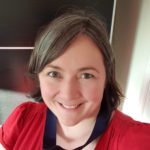
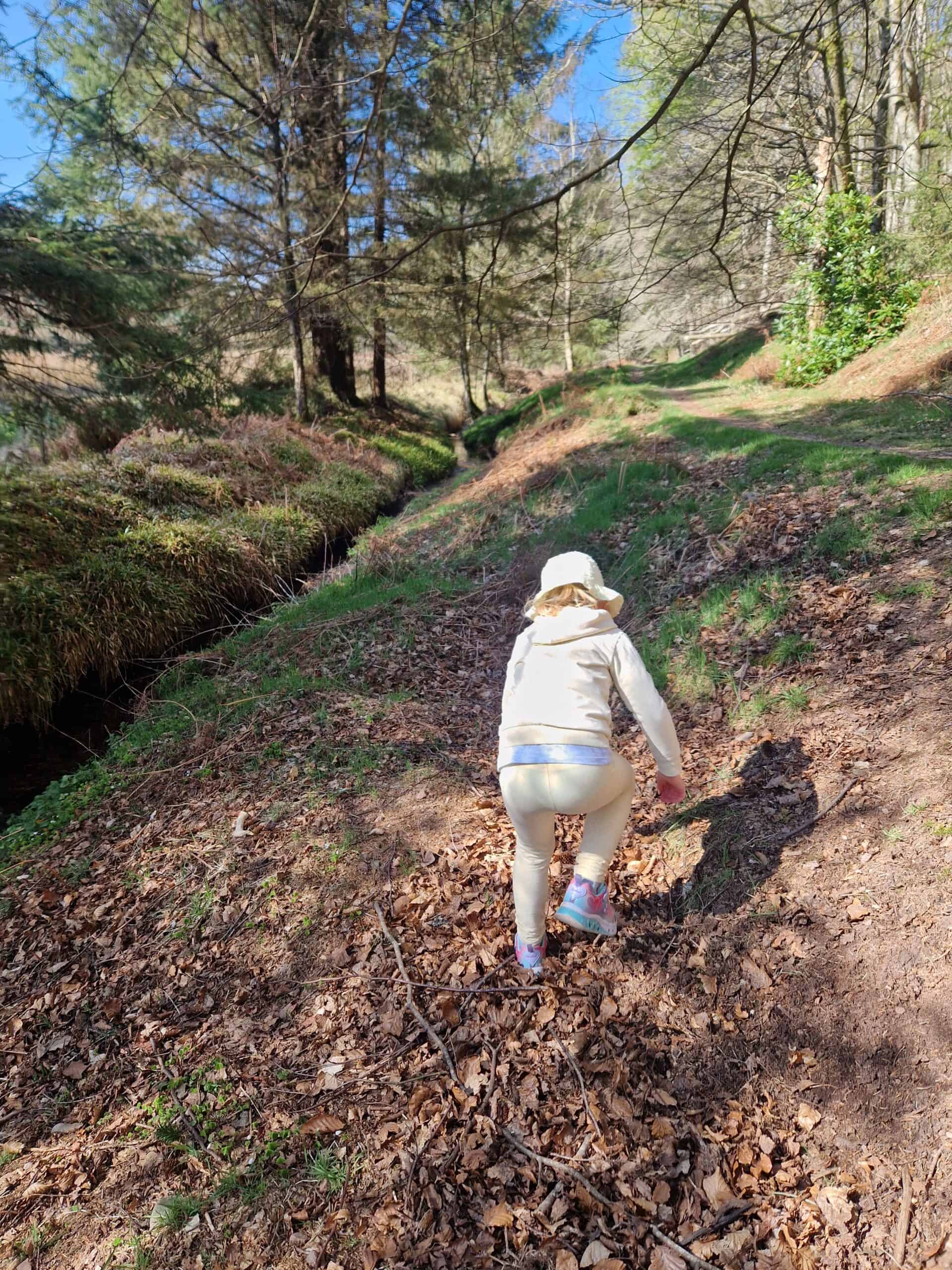
I live in rural Aberdeenshire with my husband and seven-year-old daughter. I’m a chemist at the government marine labs by day; in my evenings and weekends, I’m volunteering with my local Rainbows, teaching them core life skills or dragging my daughter into the wild outdoors to teach her about the natural world around her.
-
Read more
I studied neuroscience originally, all about the brain and nervous system. I was so fascinated with the idea of one organ controlling everything from movement in your little toe through to whether or not you like ice cream (yes please!). I then went on to study for a MRes (Masters in Research) in Biomedical Sciences where they taught you all about how you go about doing a research project in a uni from the start through to writing a paper.
Somewhere along the way after finishing this and starting a research post at a biomedical company, I ended up moving up to Aberdeen for my partner’s work and took a detour into nursing. I ended up applying the neuro stuff to actually treating the illnesses rather than just studying them.
When we weren’t working, we were scaling the mountains around Scotland, trying to climb as many of those over 3,000 feet as we could ( “Bagging the Munros”).
After having my daughter, I went back into the sciences again and did a MSc in Analytical Sciences before starting in the job I’m in now.
Not so much of the mountain climbing these days but certainly a lot more running! Sponsored 10K runs and half marathons and (trying to) encourage small human to enjoy physical activity and the outdoors too!
-
My pronouns are:
She/Her
-
How I use Science in my work:
I’m based within an organic chemistry team, monitoring the levels of various chemicals/pollutants within sediment and various fish samples from around the coast.
-
My Work:
I work within the Scottish Government’s Marine Directorate where we monitor the levels of different chemicals (pollution) in the seas around our country.
-
Read more
The team overall look at the effect of things like noise pollution from wind farms, oil rigs, shipping traffic etc on wildlife movements and population numbers, and fishing stock or the levels of different nutrients in the sea surface waters, or toxins in certain fish.
My team measure chemicals in sediment samples taken from the sea bed and different types of fish and shellfish. These levels are monitored over the years and help the government make decisions on policies for controlling the use of the chemicals and improving the conditions in the waters around our coast as much as possible.
We use a range of different techniques to prepare the samples for testing and a range of different equipment to test them depending on the chemicals being tested.
A lot of the work involves developing the methods and validating them (making sure that the method really works like it’s supposed to). It also involves a lot of problem solving when results don’t quite go as you expect and trying to figure out why!
-
My Typical Day:
I get up and sort my daughter for school and either my partner takes her and I head to work or, if he’s overseas for work, I take her and then drive the 45 minute commute to work. I arrive and grab a quick coffee and have a catch up with colleagues, discussing plans for the day. I spend 4-5 hours doing lab work and then head home.
The main methods I use tend to run over two days at a time. One method, involves extracting (separating) lipids from fish/shellfish (Smedes total lipid extraction). The separation is done on one day and the amount of lipid is measured the next day after samples are left overnight. Another method involves measuring total organic carbon levels in sediment using an elemental analyser (CHN, letters show the elements tested). The inorganic carbon is removed the day before and the samples are tested the next day on the instrument.
In and around this, there is a lot of work to prepare samples for the different tests once they’ve been collected on the yearly cruises.
On a Monday, we would have an Organics team meeting to discuss our plans for the week, the technical manager giving an overall update on what’s been happening and each person updating on their progress and plans.
-
Read more
For the Smedes, I prepare all the equipment I need beforehand, labelling all the glassware, switching on the oven for when it’s needed later in the day and doing a check of the balances before they’re used. I get the samples I need out of the freezer to give enough time for them to defrost before I start weighing out what I need. I switch on water bath for the evaporation of samples later in the day.
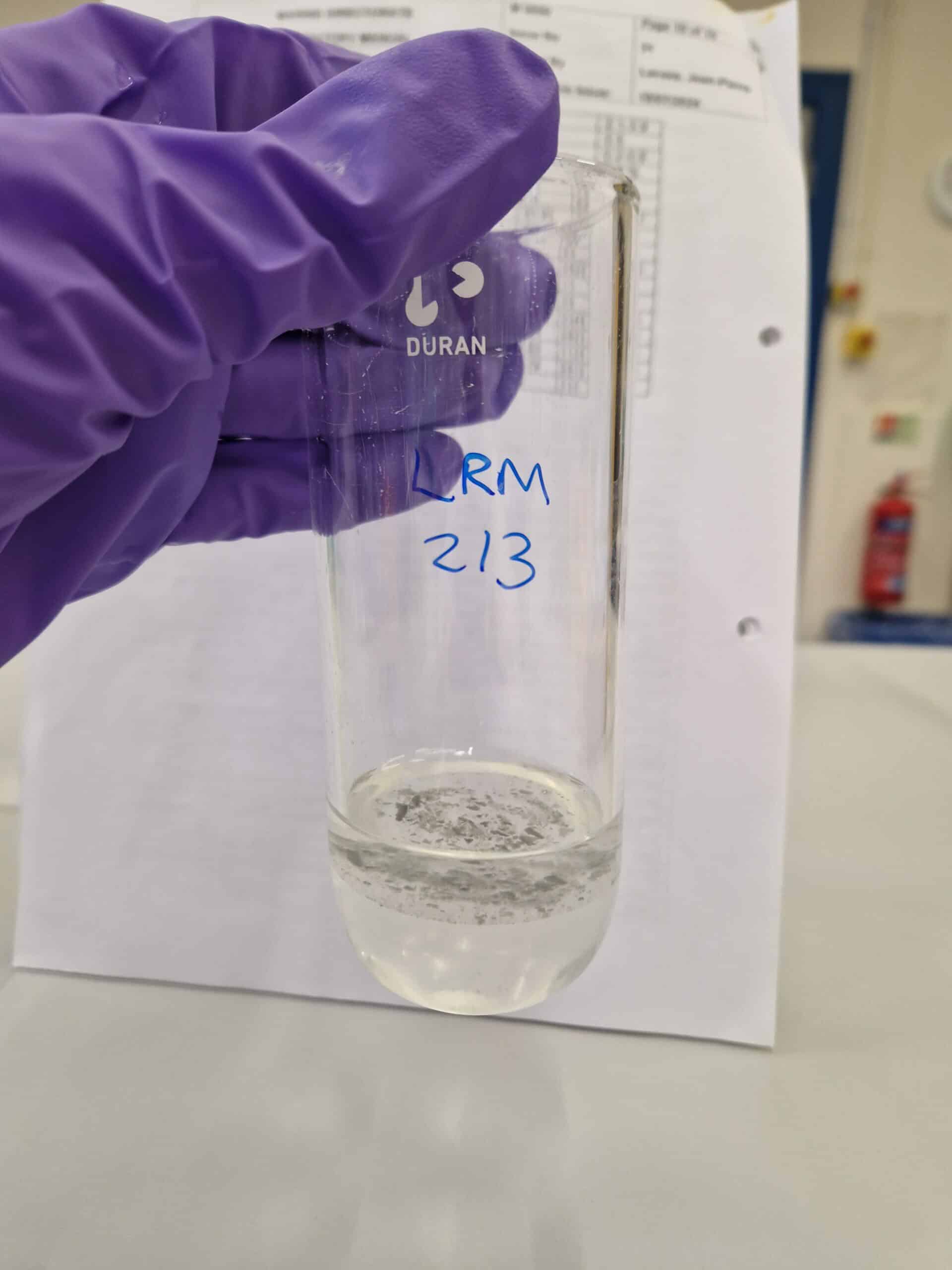
For this method, I use solvents (substances that dissolve other substances) to extract the lipids from the fish/shellfish samples. Depending on the solvents used, you can target specific types of lipids. For us, it’s total lipids so we use a mix of isopropanol and cyclohexane. The solvents are added to the samples in large centrifuge tubes and then mixed up at high speed with an “Ultra Turrax”. Water’s added, the samples are mixed up again and then centrifuged. The top layer (10 mL) is taken off with a pipette and added to a pre-weighed flask before the method is repeated again with a mixture of the solvents. Each sample has its own labelled flask and for each, the second 10 mL is added to the same flask as the first 10 mL.
Each flask is placed in a rotary evaporator to evaporate away the solvents, leaving behind the extracted lipids. They’re placed in an oven for one hour before being left to cool overnight. The next day, the flasks are weighed and the lipid percentage is calculated based on the original flask weight and sample weight.
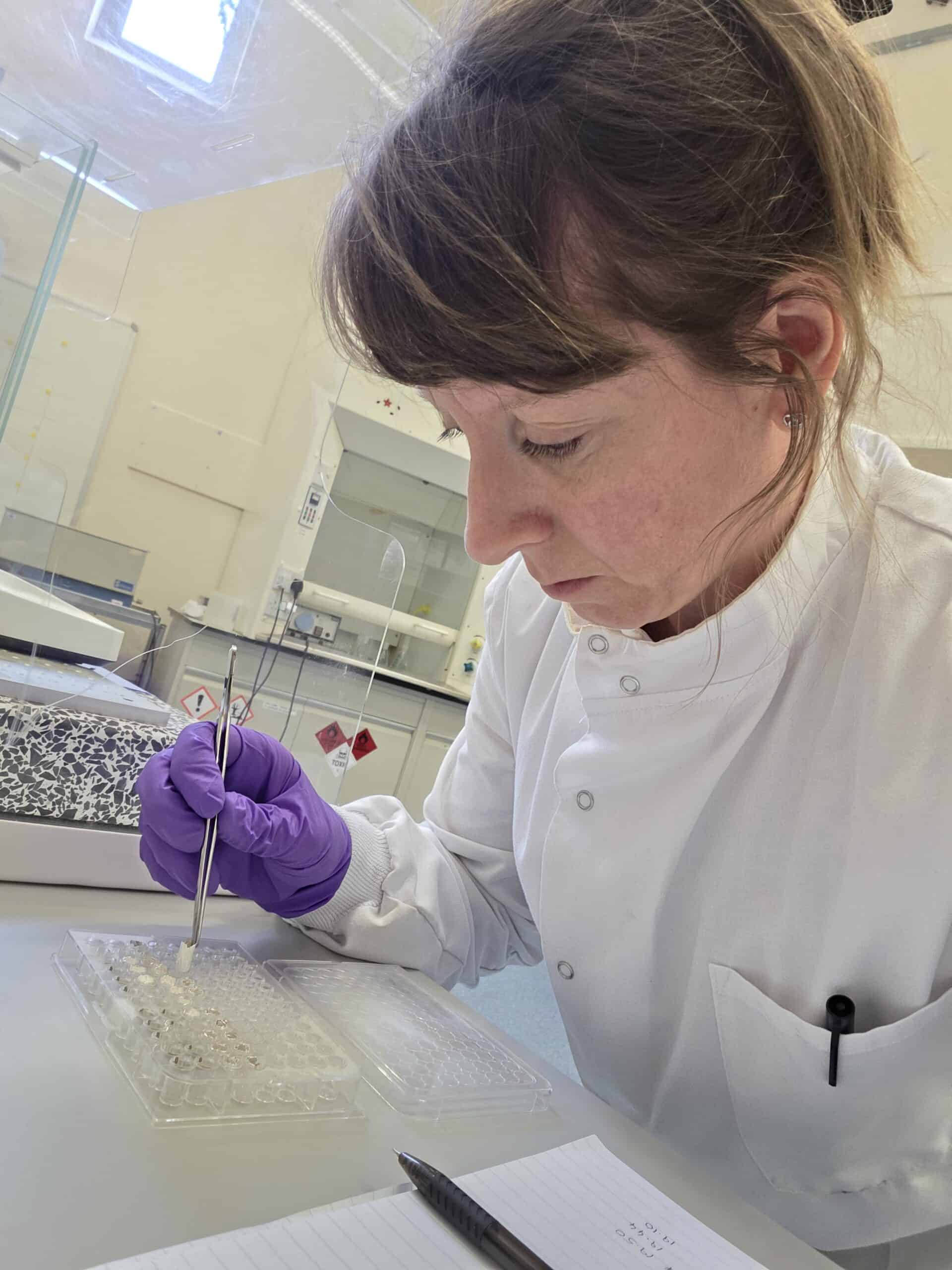
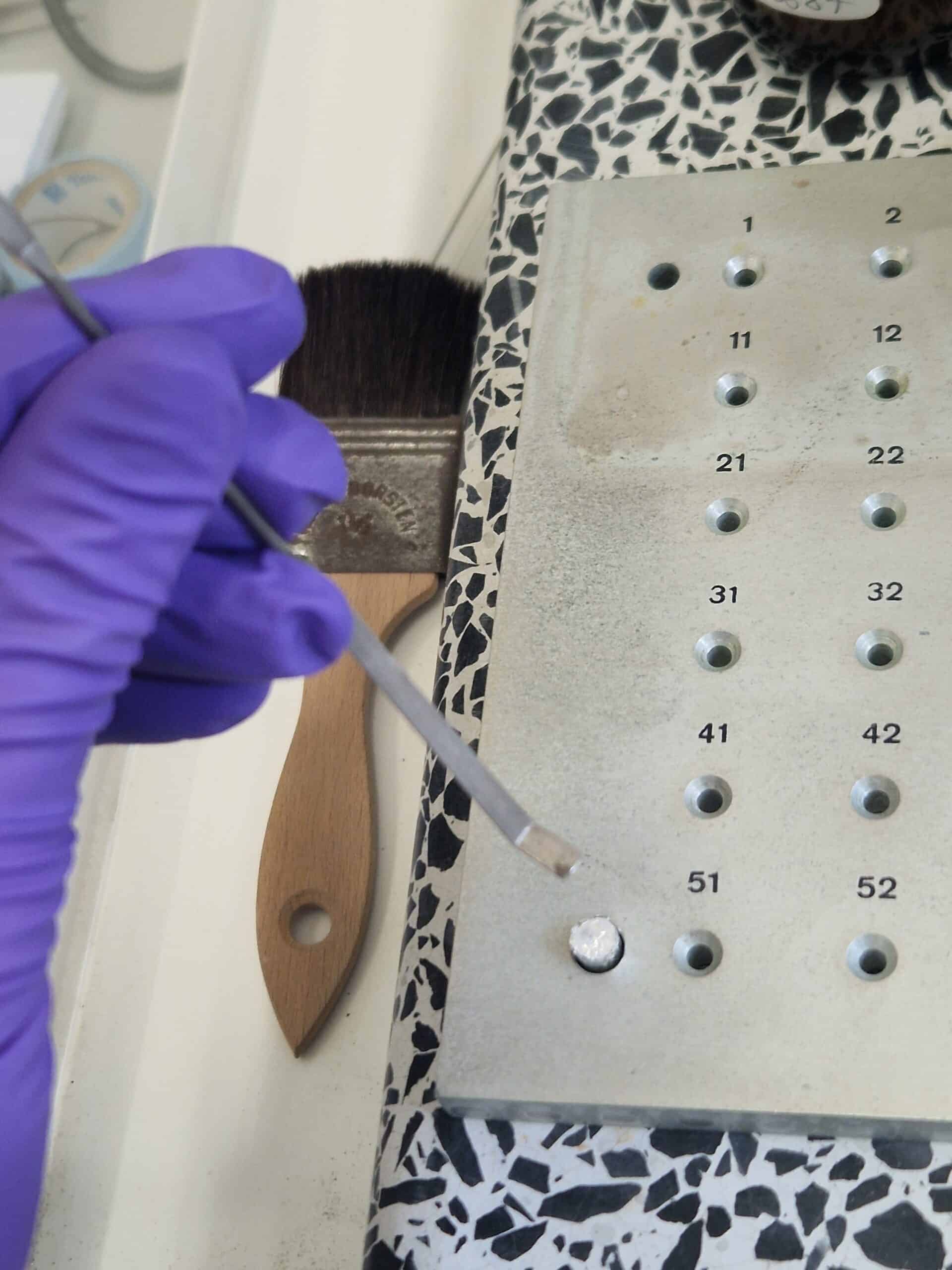
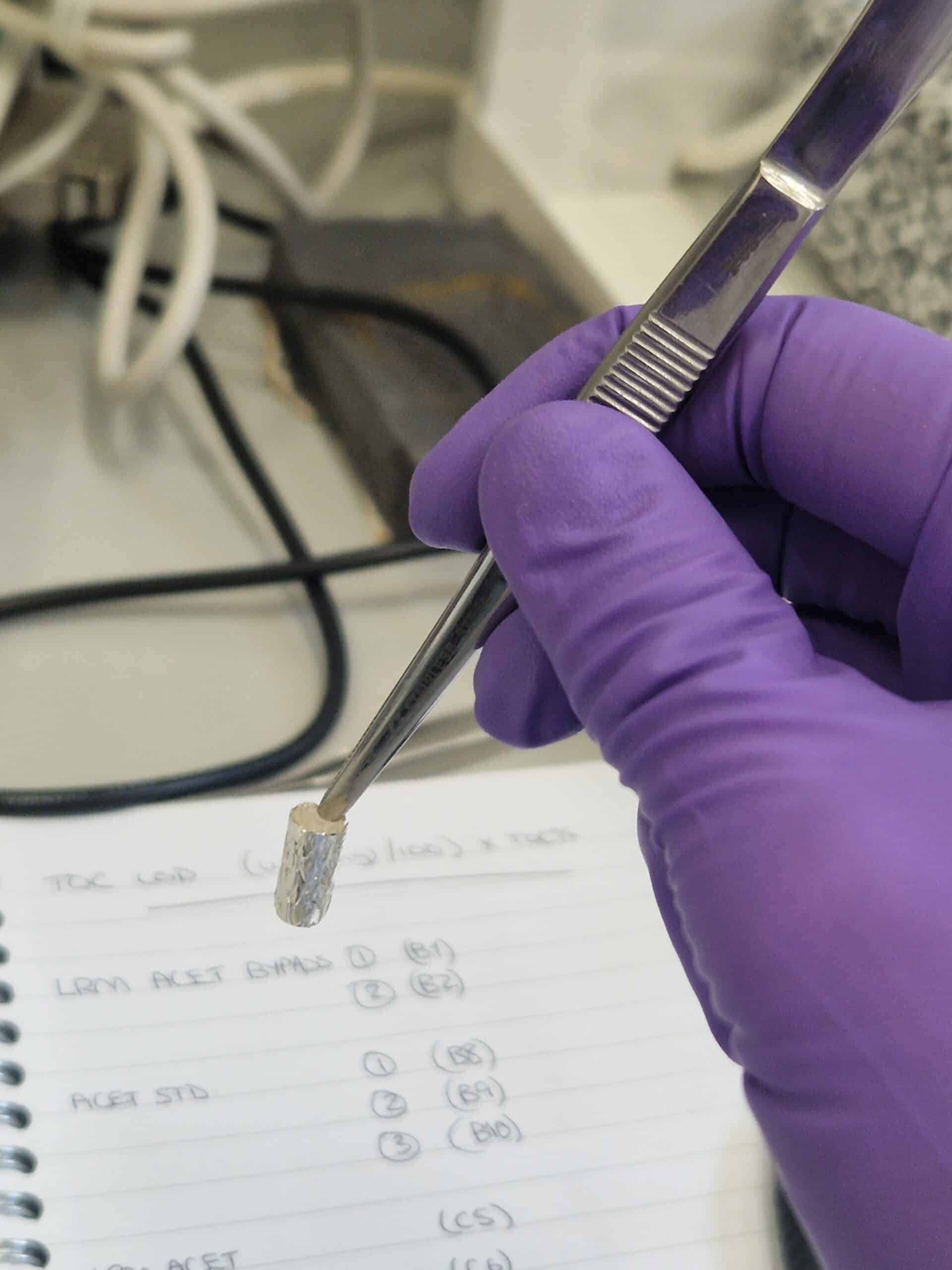
For the total organic carbon, small silver capsules are filled with around 20mg of sediment sample. To remove the inorganic carbon (carbon compounds that don’t have carbon-hydrogen bonds, like various minerals and carbonates), I use a pipette to add small (microlitre) amounts of hydrochloric acid to the capsules and put them over a heated block for set amounts of time. I repeat this a number of times over a 3-hour period before folding the capsules into little parcels using tweezers. The samples are then tested in the CHN analyser which uses combustion to convert the samples to their simple combustion gases (CO2 and N2). Depending on the weight of the sample, the weight/amount of the individual elements can then be calculated from this.
-
What I'd do with the prize money:
I would use this to fund or explore engagement in primary schools, giving demonstrations or presentations at age-appropriate levels that make chemistry/science fun and engaging from a young age.
-
Education:
St Michael’s Academy
University of Glasgow
Univeristy of Strathclyde
Robert Gordon University
Robert Gordon University
-
Qualifications:
Standard Grades:
French (1), Modern studies (1), English (2), Maths (2), Biology (2), Chemistry (2), Art and Design (2), Office and Information Studies (2)
Highers:
English (A), Maths (A), Biology (A), Modern Studies (B), Chemistry (C)
BSc Hons Neuroscience
MRes Biomedical Sciences
BN (DipHE) Nursing
MSc (Distinction) Analytical Sciences
-
Work History:
2024-present – Chemist (Scottish Government Marine Directorate)
Aug 2017- Dec 2019 – Staff Nurse (Sue Ryder)
Aug 2014 – May 2017 – Staff Nurse (HC One Healthcare)
Jul 2006 – Jul 2007 – Research Scientist (Scottish Biomedical)
-
Current Job:
Chemist
-
Employer:
Scottish Government Marine Directorate
-
My Interview
-
How would you describe yourself in 3 words?
Chemist who Runs
What did you want to be after you left school?
Neuroscientist
Were you ever in trouble at school?
Yes
If you weren't doing this job, what would you choose instead?
Running coach
Who is your favourite singer or band?
Imagine Dragons
What's your favourite food?
Pasta
If you had 3 wishes for yourself what would they be? - be honest!
House in the tropics. A full night's sleep! A whole room full of running shoes
Tell us a joke.
What do you call a fairy that doesn't like a shower? Stinkerbell
-